


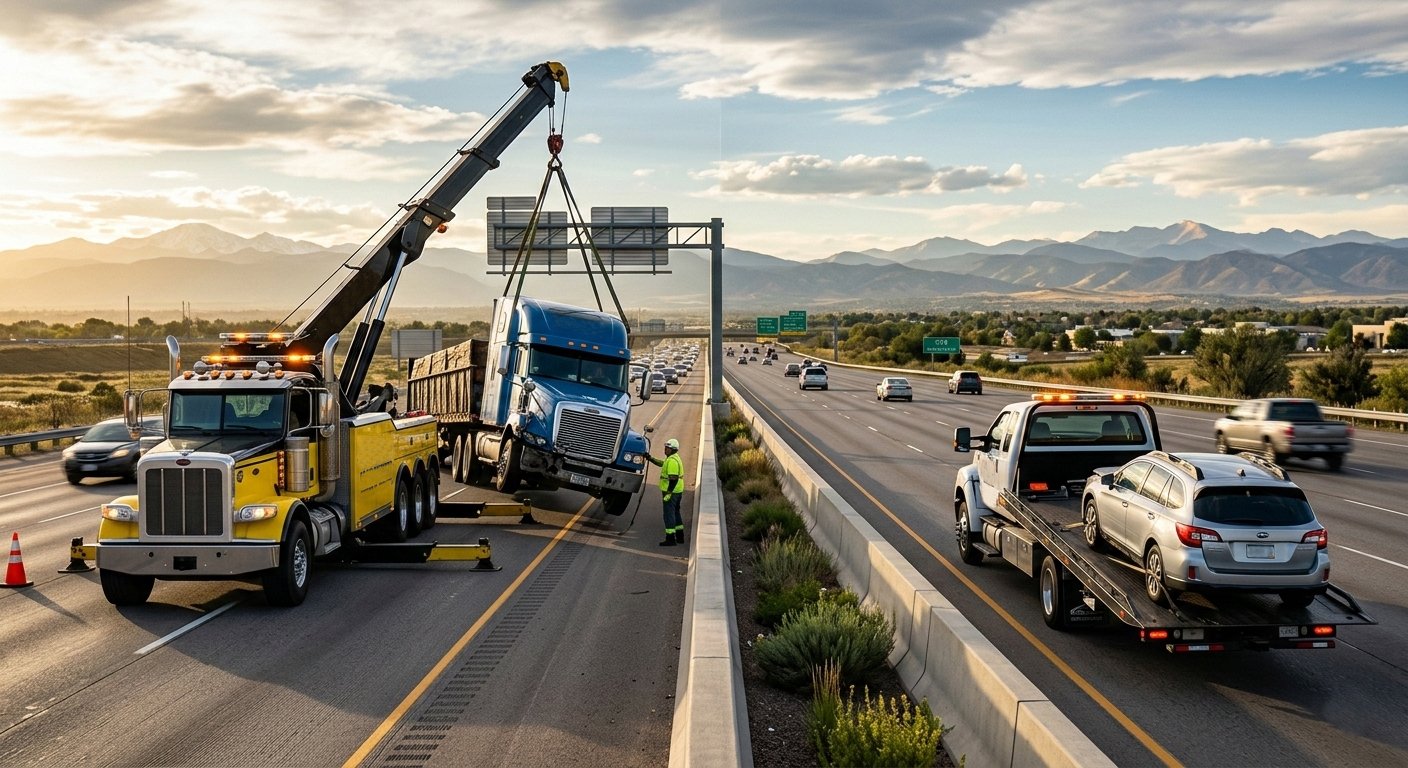
With the diverse needs of vehicles on the road, understanding the distinction between heavy duty towing and standard towing is necessary for you as a vehicle owner in Aurora, CO. Whether your vehicle is a compact car or a commercial truck, knowing which towing service to call can make all the difference in ensuring a smooth recovery experience. In this blog post, we’ll highlight the key differences between these two types of towing services, helping you choose the right option for your specific situation.
Understanding the distinctions between heavy-duty towing and standard towing is important for anyone in need of roadside assistance. Heavy duty towing addresses the needs of larger vehicles, like buses, trucks, and construction equipment, requiring specialized equipment and trained personnel. In contrast, standard towing typically handles regular cars and light-duty vehicles, using simpler techniques and tools better suited to everyday roadside situations.
Heavy duty towing encompasses the recovery and transport of vehicles that exceed the weight and size limitations of standard towing services. This category includes large commercial vehicles such as semitrailers, dump trucks, and oversized machinery, often weighing over 10,000 pounds. The specialized equipment employed, such as heavy-duty tow trucks, ensures safe and efficient handling of these formidable loads, ensuring a reliable service experience when emergencies arise.
Standard towing services primarily serve light-duty vehicles, such as cars and SUVs, using simpler equipment and techniques. This type of towing is generally quicker and requires less expertise compared to heavy duty towing. Standard towing often uses flatbed trucks or hook-and-chain systems, which are well-suited to maneuvering everyday vehicles. A typical situation might involve assisting a driver with a flat tire or an engine issue, where speed and convenience are paramount.
Standard towing services are designed to provide rapid assistance with lighter vehicles, ensuring that you can get back on the road as soon as possible. The average response time for standard towing can be as little as 30 minutes, especially in urban areas like Aurora, CO. These services often include winching, jump-starting batteries, and providing fuel delivery, all tailored for light-duty scenarios that don’t pose the significant challenges associated with heavier vehicles. Whether you’ve locked your keys inside or encountered a minor mechanical failure, standard towing services have the tools and expertise to handle your needs efficiently and effectively.
The disparity between heavy-duty towing and standard towing is largely defined by the equipment deployed. Heavy-duty towing operations utilize specialized machinery designed to handle considerable weight and complex recovery scenarios. This equipment not only ensures safety but also enhances efficiency, delivering peace of mind to all parties involved in the towing process.
Heavy-duty towing requires equipment such as wreckers, rotators, and flatbeds capable of handling multiple tons. For example, a rotator enables 360-degree rotation, supporting complex recovery scenarios common in commercial trucks and buses. Such tools can lift vehicles upright, maneuver them through tight spots, and stabilize larger loads during transport.
Standard towing equipment is designed for lighter vehicles and typically uses tow dollies, flatbeds, or conventional tow trucks. These tools efficiently handle cars and smaller SUVs but may not withstand the rigors associated with larger vehicles. Your decision to use standard towing gear hinges not only on vehicle weight but also on the towing scenario, such as whether the vehicle is operational or in need of extraction.
Standard towing gear typically includes chains, straps, and hitch attachments capable of securing vehicles weighing up to 10,000 pounds. While this equipment is effective for standard passenger vehicles, it may struggle under the load of larger or damaged vehicles. Knowing the limits of your towing equipment helps avoid mishaps and ensure safe, successful towing experiences when dealing with lighter applications. Always assess your specific needs to choose the appropriate gear.
Your decision to call for heavy duty or standard towing depends heavily on the specific situation you’re facing. Each service caters to different needs, and understanding these can save you time and frustration. Here’s a quick guide:
Perceiving these factors will help you make an informed choice between heavy-duty and standard towing services.
In emergencies, heavy duty towing is important for handling larger vehicles like RVs, buses, or heavy machinery that have become disabled. For instance, if a commercial truck has broken down on a busy highway, you would need a heavy duty tow truck equipped to transport large loads safely. Additionally, incidents involving accident scenes with multiple large vehicles often necessitate heavy duty support to clear the area efficiently.
Standard towing is perfect for everyday situations, such as a flat tire or battery failure, involving passenger cars or smaller SUVs. If your vehicle is stuck in a parking lot or unable to start after running out of fuel, a standard tow truck can easily manage these common scenarios. Standard service is timely and effective, getting you back on the road without unnecessary delays.
Everyday incidents often involve simple vehicle issues, such as locking your keys in the car or needing a jump start. These occurrences are typically resolved swiftly with standard towing, as providers can arrive at your location quickly. This service addresses your immediate needs without the added complexity of larger vehicle specifications, providing convenience and efficiency when minor mishaps occur.
Understanding the cost implications of heavy duty versus standard towing can significantly impact your budget. Heavy duty towing typically comes with a higher price tag due to the specialized equipment and expertise required. In contrast, standard towing services are generally more accessible and economical. However, evaluating not only upfront costs but also overall value is crucial to making an informed choice.
Pricing structures for towing services can vary widely based on several factors, including distance towed, vehicle type, and location. Heavy duty towing often has a base fee that is significantly higher than standard towing due to the additional resources involved. Standard towing may charge a flat rate for local distances, while heavy duty companies usually calculate costs based on weight and complexity of the tow.
Hidden costs can often arise during the towing process, impacting your total bill. These could include fees for additional miles, tolls, or specialized equipment needed for your situation. If your vehicle is especially large or heavy, expect additional charges for the equipment required to safely tow it.
For instance, if your heavy-duty vehicle requires a special dolly or an additional truck due to weight constraints, these associated charges could add up quickly. Moreover, if your vehicle requires recovery services in addition to towing, this can further increase the total cost. Transparency is key, so always ask for a detailed cost breakdown before agreeing to the service; this will help minimize any surprise fees that may arise when the tow is completed.
Your choice between heavy duty and standard towing can be influenced by the experiences of others who have faced similar situations. From the moment you place a call to the time the towing truck arrives, the feedback from previous customers sheds light on the reliability and efficiency of the towing services offered by MPH Towing and Recovery. Positive testimonials often highlight prompt response times and staff professionalism, underscoring the importance of choosing a respected towing service in Aurora, CO.
Ultimately, understanding the differences between heavy-duty towing and standard towing services in Aurora, CO, can greatly impact your towing experience. You should consider the size and weight of your vehicle or equipment, as well as the specific services offered by professionals like MPH Towing and Recovery. By choosing the right towing service, you ensure your needs are met efficiently and safely, giving you peace of mind during an otherwise stressful situation.
Copyright © 2026 MPH Towing and Recovery