


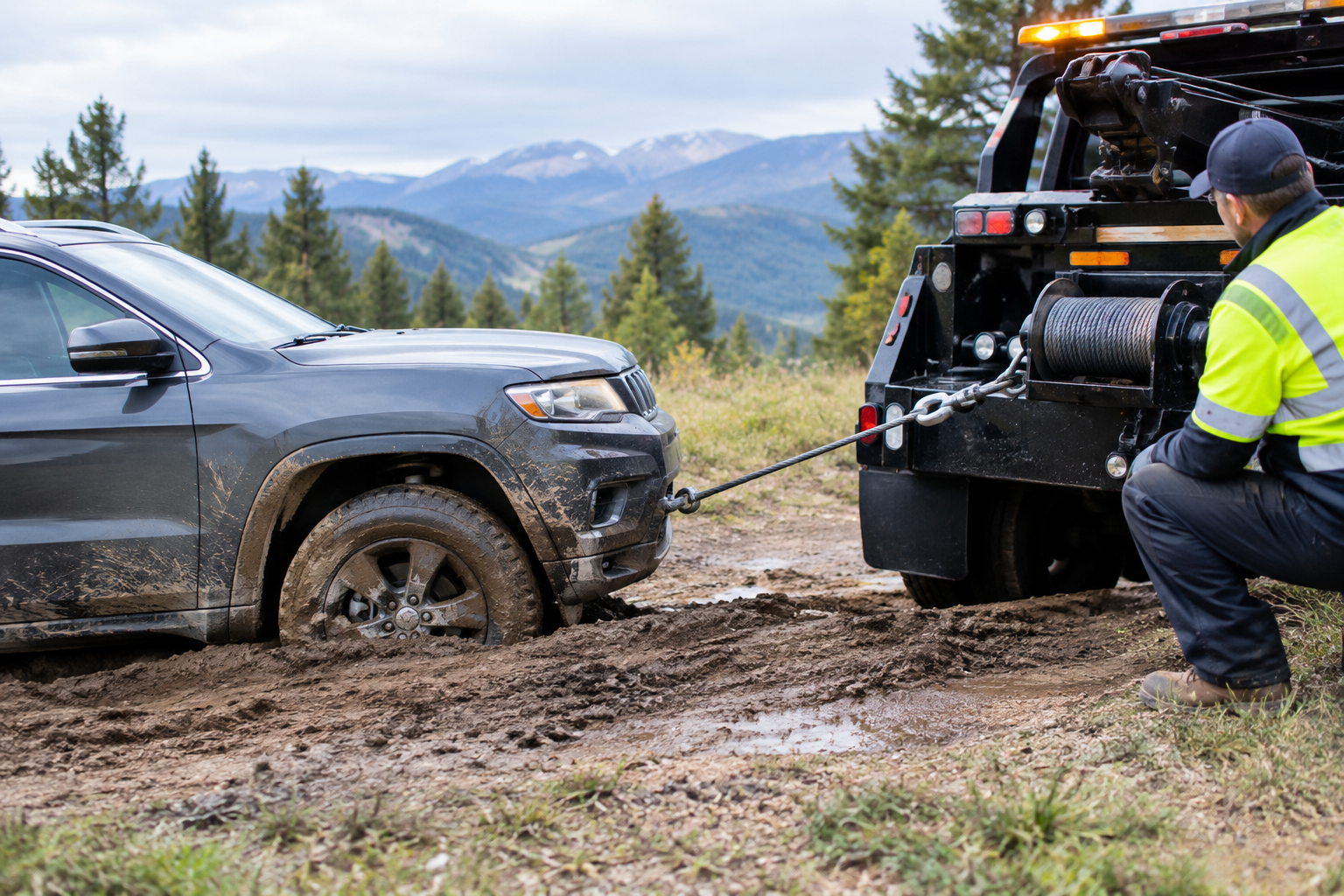
Getting a vehicle stuck can happen unexpectedly. A car may slide into a ditch, sink into mud, become trapped in snow, or lose traction on a soft shoulder. In these situations, repeatedly pressing the accelerator can make the problem worse. Tires may dig deeper, the undercarriage can contact the ground, and an unsafe recovery attempt can damage the vehicle or put people nearby at risk.
This is where professional Winch Outs Service Aurora Co can provide a controlled recovery solution. Winch-out recovery uses specialized equipment and careful pulling techniques to move a stuck vehicle back toward stable ground. Unlike ordinary towing, the objective is often to free the vehicle from its current position before deciding whether it needs additional transportation.
For dependable roadside recovery support, MPH Towing and Recovery for Aurora roadside emergencies provides towing and recovery assistance for motorists in Aurora and surrounding Colorado communities.
A winch-out service is designed to recover a vehicle that cannot safely move under its own power because it is stuck or positioned in difficult terrain. Common situations include vehicles trapped in:
A winch uses controlled pulling force through a cable or synthetic rope. The recovery operator determines where the equipment should be positioned and which approved recovery point should be used.
Vehicle manufacturers commonly recommend using recovery points specifically intended for recovery rather than attaching equipment to unsuitable components.
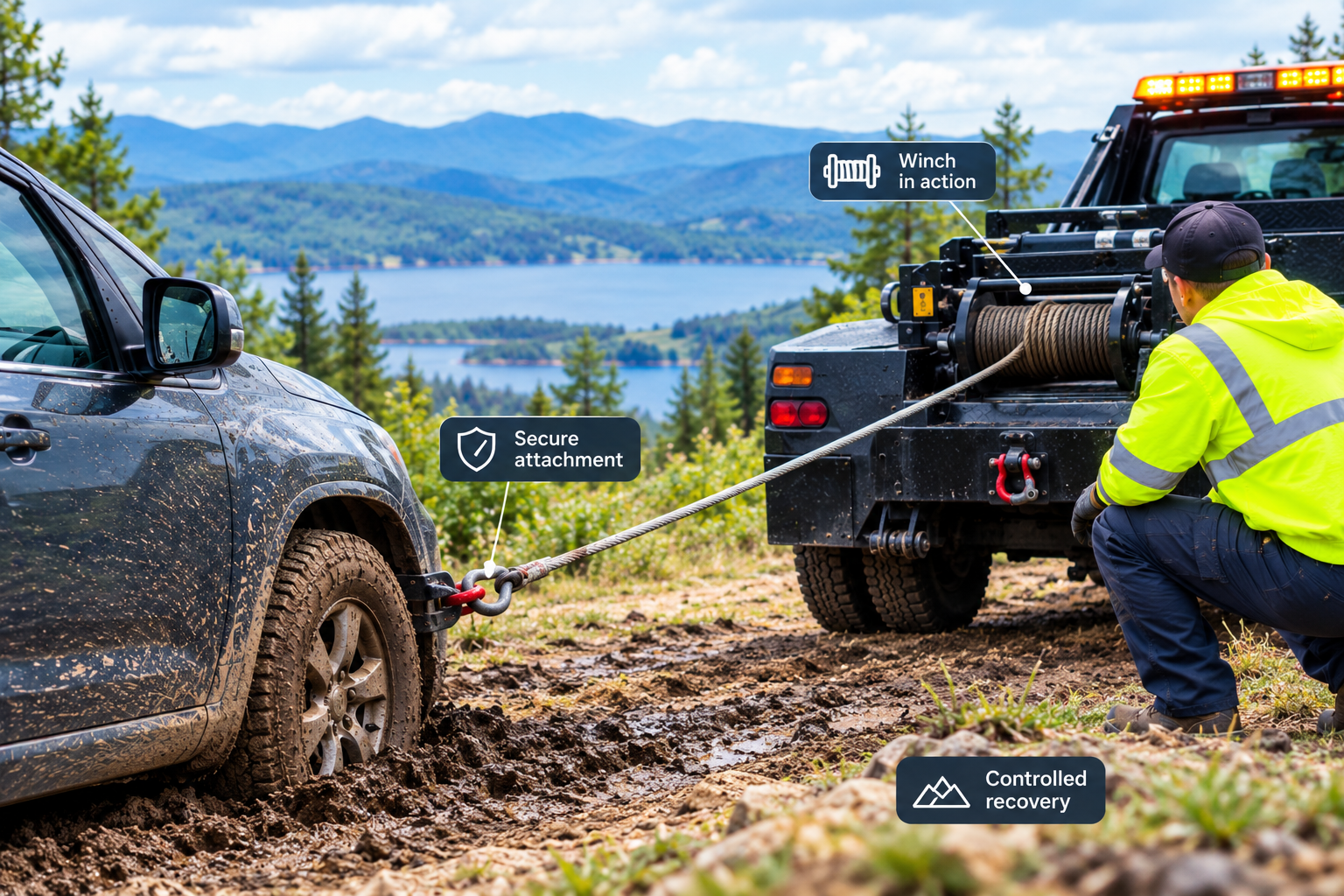
Professional recovery begins with an assessment rather than immediately pulling the vehicle.
The operator first considers the vehicle’s position, terrain, obstacles, traffic conditions, and the direction in which the vehicle needs to move. This assessment helps determine the safest recovery approach.
The operator may then:
The process is not simply about using maximum pulling power. Controlled force, proper attachment, equipment condition, and positioning all matter.
One of the most important parts of safe vehicle recovery is selecting the correct attachment point.
A bumper, suspension component, shipping tie-down, or other unsuitable part may not be designed to withstand the forces created during recovery. Using the wrong attachment point can cause vehicle damage or equipment failure.
A professional recovery operator can identify the appropriate connection point based on the vehicle and recovery circumstances rather than relying on an improvised attachment.
The direction of the pull can affect both safety and the outcome of the recovery.
If a vehicle is sitting at an angle in a ditch, pulling from the wrong direction may move it sideways rather than bringing it safely toward the roadway. Similarly, an improper angle can place unnecessary stress on recovery equipment or vehicle components.
For this reason, recovery operators consider the vehicle’s position, the terrain, and the intended path before applying tension.
The goal is to move the vehicle gradually toward a stable position rather than simply pulling as hard as possible.
A stuck vehicle can become more difficult to recover when the driver continues trying to escape without understanding the terrain.
For example, spinning the tires can dig them farther into mud or soft ground. A vehicle resting against a ditch edge or obstacle may also experience additional underbody contact when the driver attempts to accelerate out.
Controlled winching can reduce the need for repeated wheel spinning and uncontrolled vehicle movement. The operator can apply steady force while monitoring how the vehicle responds.
If the vehicle has already suffered mechanical or collision damage, however, winching may not be appropriate in every situation. A damaged vehicle may require a different recovery or towing method.
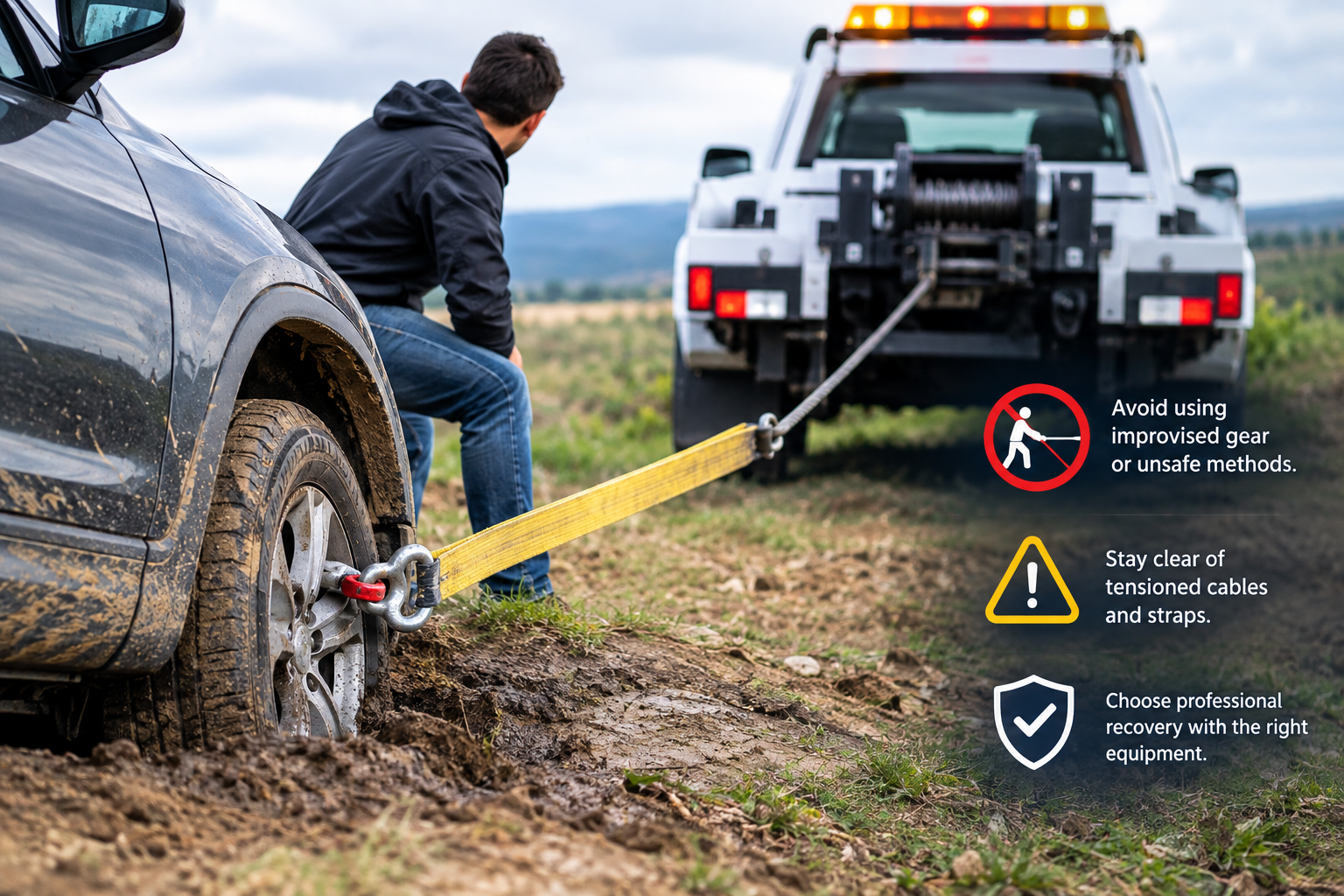
It can be tempting to ask another motorist to pull a stuck vehicle using whatever strap, chain, or connection is available. However, recovery equipment can be subjected to significant loads.
Improper winch use can result in serious injury. Drivers should also avoid standing near or directly in line with a cable or strap under tension. If equipment or an attachment point fails, stored energy can be released suddenly.
Professional recovery helps replace improvised methods with appropriate equipment and controlled procedures.
Several roadside situations can make winch recovery useful.
A Vehicle Slides Into a Ditch
A vehicle can leave the roadway after a loss of traction, sudden maneuver, or poor shoulder conditions. If the vehicle remains mechanically capable but cannot climb back onto the road, a winch-out may be appropriate.
Mud Traps the Tires
Rain can make unpaved surfaces, construction areas, fields, and soft shoulders difficult to navigate. Once tires sink into mud, additional acceleration may only make the situation worse.
Snow Prevents Movement
Snow accumulation can leave vehicles stuck in driveways, parking areas, roadside shoulders, or less-traveled roads. A controlled recovery may help reposition the vehicle.
Soft Shoulders Cause Loss of Traction
A vehicle that moves partially onto a soft shoulder can become difficult to drive back onto pavement. A winch can help guide the vehicle toward a more stable surface when conditions permit.
Uneven Terrain Limits Vehicle Movement
Vehicles can also become stuck on steep or uneven surfaces where the tires cannot generate enough traction to move safely.
If your vehicle becomes stuck, focus first on personal safety.
Turn on your hazard lights when appropriate and remain aware of passing traffic. Avoid standing behind or around the vehicle if its position creates a traffic hazard.
Do not repeatedly accelerate if the tires are digging deeper into soft ground. Also avoid attaching recovery equipment to unknown vehicle components.
When contacting a towing company, describe the situation clearly. Tell the dispatcher whether the vehicle is in mud, snow, a ditch, soft ground, or another difficult position. Mention whether the vehicle is blocking traffic and whether there is visible vehicle damage.
Accurate information can help the towing provider determine what type of recovery response may be necessary.
Professional recovery involves more than bringing a winch to a stranded vehicle. The operator must understand the recovery environment and use equipment appropriately.
A safe recovery can involve evaluating:
These factors help determine whether a straightforward winch-out is appropriate or whether additional towing equipment may be required.
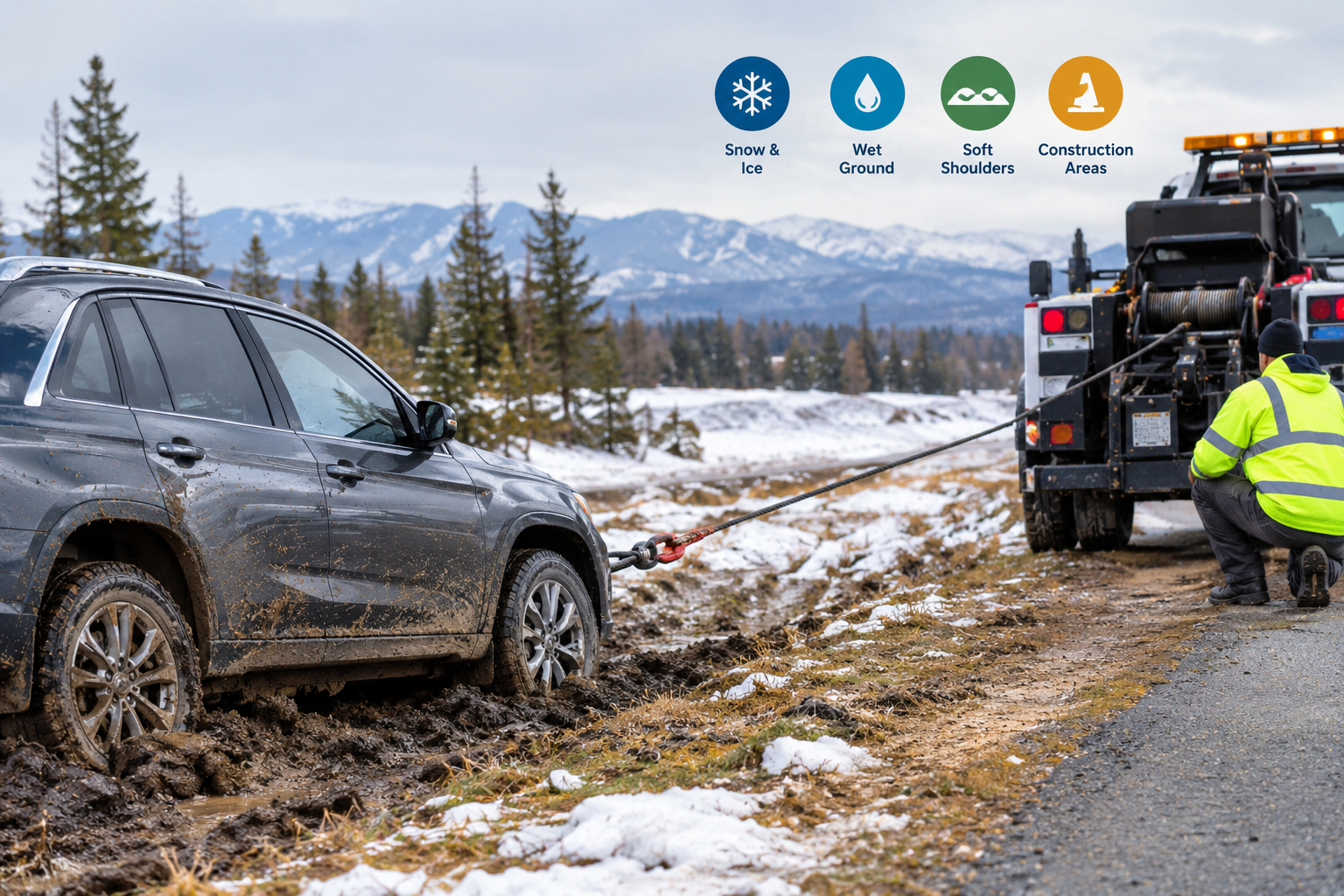
Local roadside conditions can vary considerably. Drivers may encounter snow, wet ground, soft shoulders, construction areas, ditches, or difficult parking surfaces.
Having access to a local towing provider can make it easier to request recovery assistance when a vehicle cannot move safely.
For drivers who need specialized vehicle extraction, professional Winch Outs Service Aurora Co for stuck vehicle recovery can provide a targeted solution when a standard tow is not enough to free the vehicle.
The key is to explain the vehicle’s exact situation when requesting assistance so the appropriate service and equipment can be considered.
What is a winch-out service?
A winch-out service uses controlled pulling equipment to recover a vehicle that is stuck in mud, snow, sand, a ditch, soft ground, or another difficult position.
Can a winch-out damage my vehicle?
Improper recovery can cause damage. Using the correct recovery point, equipment, pulling direction, and technique helps reduce unnecessary stress on the vehicle.
Can I use another vehicle to pull my car out?
Improvised recovery can be hazardous. Recovery equipment should be specifically designed for the task, and drivers should follow applicable vehicle and equipment instructions.
Should I keep accelerating when my tires are stuck?
No. Continued wheel spinning can worsen the situation and may damage tires or vehicle components. If the vehicle cannot be freed safely, professional recovery assistance may be appropriate.
Is winch-out service the same as towing?
Not necessarily. Winch-out recovery is generally focused on extracting a stuck vehicle. Once the vehicle is recovered, it may or may not require additional towing.
When should I call for professional recovery?
Consider calling when the vehicle is deeply stuck, positioned in a ditch or unstable area, exposed to traffic, or cannot be safely recovered with the equipment and knowledge available to you.
A stuck vehicle can quickly become a safety concern when drivers attempt to force it free without the right equipment or recovery technique. Professional winch-out service provides a controlled approach for situations involving mud, snow, ditches, soft shoulders, and difficult terrain.
If your vehicle needs roadside recovery in Aurora, MPH Towing and Recovery’s local towing and recovery assistance can help you determine the appropriate roadside service for your situation.
For service availability or to discuss your specific roadside recovery needs, contact MPH Towing and Recovery for Aurora towing assistance.
Copyright © 2026 MPH Towing and Recovery