


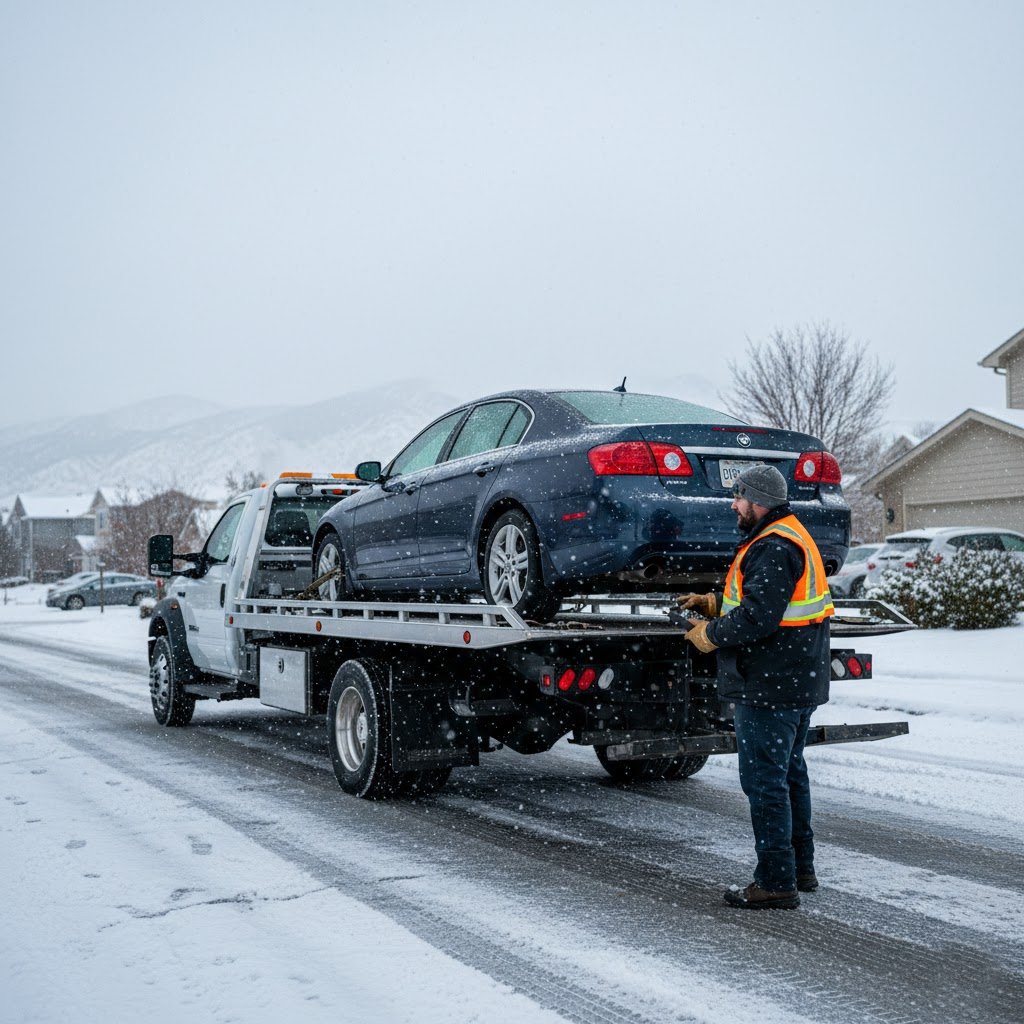
With winter weather in Aurora, CO, it’s important for you to be prepared for the challenges that come with driving in icy and snowy conditions. Whether you’re commuting to work or heading out for leisure, knowing how to handle towing safely can make a significant difference. In this post, MPH Towing and Recovery offers practical tips to ensure your vehicle remains secure and your winter travels are smooth, allowing you to navigate the winter roads confidently.
Preparing your vehicle for winter in Aurora, CO, involves more than just a good set of tires. Stocking your car with necessary winter gear can significantly enhance your safety and performance. From keeping your visibility clear with de-icing tools to having a proper ice scraper and snow brush on hand, equipping your vehicle with the right necessities can help you navigate icy roads more efficiently. Additionally, consider investing in jumper cables, flares, and a portable phone charger to ensure you’re prepared for any winter emergencies.
Your emergency kit should include basic necessities like a first-aid kit, flashlight, extra batteries, blankets, and non-perishable food. Also, pack items like a shovel, sand or cat litter for traction, and a battery-powered or hand-crank radio. Having a set of tools, including wrenches and screwdrivers, can also be useful. These necessities not only prepare you for unexpected situations but also provide peace of mind during winter drives.
Tires play a pivotal role in winter driving safety, affecting traction and braking on slick roads. As temperatures drop, the rubber in standard tires becomes hard, reducing grip. All-season tires are often a better choice for milder winters, but if you frequently encounter heavy snowfall or ice, winter tires with deeper treads and softer rubber compound are recommended. Regularly checking tire pressure and tread depth helps ensure optimal performance; the American Automobile Association recommends 6/32 inch as the minimum tread depth for winter tires. Winter tires can significantly reduce stopping distances, making them a worthwhile investment for your safety.
Mastering winter driving in Aurora requires adapting to the unique challenges presented by snow and ice. You should become familiar with your vehicle’s handling characteristics and adjust your techniques accordingly. That means learning to manage skids, knowing when to apply the brakes, and adjusting your speed to match road conditions. Anticipating weather changes and planning your routes can also help ensure safe navigation through snowy terrain.
Braking on icy surfaces necessitates a gentler touch. Sudden stops can cause your vehicle to slide, so apply the brakes gradually to avoid loss of control. Techniques like threshold braking—where you apply your brakes to the point just before locking up—can help maintain traction and control. You’ll find that your car responds better, allowing for safer stops even in slippery conditions.
Maintaining a greater distance between your vehicle and the one in front can be lifesaving during winter driving. The general rule of thumb is to allow at least three to four seconds of space, which you should increase during snowstorms or icy conditions. This distance provides enough time to react and stop if the vehicle ahead suddenly brakes or skids. Maintaining safe following distances can significantly reduce your risk of being involved in a winter collision.
In snowy or icy conditions, your stopping distance can increase by up to ten times compared to dry roads. If the vehicle ahead suddenly stops or loses traction, having a greater buffer allows you ample time to adjust your speed without panic. For example, if you’re traveling at 30 mph, a safe following distance might translate to approximately 132 feet in good conditions, which becomes even more crucial when roads are slick. Be proactive and allow extra time, as this can help prevent accidents and ensure a smoother driving experience in the winter months.
Recognizing when your vehicle needs professional towing can make a significant difference during harsh winter conditions. If you experience strange noises, inefficient braking, or warning lights on your dashboard, don’t hesitate to reach out for assistance. An unusual increase in engine temperature or the vehicle stalling completely are also strong indicators that it’s time to call for towing support. Trusting your instincts in these scenarios can prevent further damage and ensure your safety on the road.
Cold temperatures can exacerbate existing issues in your vehicle, magnifying potential malfunctions that may not have been evident during warmer months. Pay attention to sluggish starts or difficulty in powering up; these may indicate battery failure due to the frigid weather. Additionally, if your vehicle struggles to accelerate or exhibits poor steering response, it may indicate underlying issues that require immediate attention.
Determining the right moment to contact MPH Towing and Recovery hinges on identifying key warning signs early. If your vehicle becomes unresponsive or shows indicators of severe mechanical failure, acting promptly can prevent further complications. Delaying contact can lead to unsafe driving conditions. If in doubt, a quick call can provide peace of mind and ensure you receive the assistance you need for safe travel.
Calling MPH Towing and Recovery when you first notice vehicle issues not only offer immediate help but also prevents more costly repairs in the future. Their professional drivers are equipped with the knowledge and tools to handle a range of winter emergencies efficiently. For example, a frozen fuel line or a malfunctioning heater can quickly turn into a significant problem, but with prompt towing service, you can ensure that your vehicle is examined by qualified professionals who understand how to tackle these specific winter challenges.
Modern technology enhances your winter driving experience in Aurora by providing real-time information to help you navigate safely. With the right apps and tools, you can stay updated on weather changes, monitor road conditions, and optimize your routes to avoid hazards. Leveraging these digital resources can significantly improve your safety and preparedness during harsh winter weather.
Choose apps like Waze or Weather Underground to acquire up-to-date information on road conditions and weather forecasts tailored for Aurora. These platforms often provide valuable insights, including traffic incidents, snow accumulations, and not only current temperatures but also short-term forecasts. Using these apps, you can make informed decisions about when to travel and which routes to avoid, ensuring a safer journey.
Navigation systems can be your best ally when it comes to avoiding winter hazards on the road. Modern GPS devices and apps, such as Google Maps, use real-time data to suggest alternative routes when weather conditions deteriorate or when accidents occur. By incorporating traffic updates, you can avoid congested areas and unsafe driving conditions. Consistently checking your navigation system while on the road helps you identify the best routes, stay informed about upcoming challenges, and adjust your travel accordingly.
Adopting the right mindset for winter driving is crucial for navigating Aurora’s snowy roads safely. Embracing a proactive approach to your driving habits helps mitigate risks associated with icy conditions. Familiarize yourself with your vehicle’s features, develop a safety-first attitude, and stay aware of your surroundings at all times. By prioritizing safety and preparation, you’re setting the stage for a confident winter driving experience.
Winter driving tests your patience and composure. Slower reaction times on icy roads can lead to anxiety, so it’s vital to practice patience. Allow extra travel time, maintain a safe distance from other vehicles, and remain calm as you navigate through challenging conditions. Confidence grows as you gain experience, so embrace the season’s hurdles as opportunities to enhance your driving skills.
Consulting with others about winter driving experiences can help you prepare mentally for the season ahead. Engaging in conversations with seasoned drivers about their strategies can provide you with valuable insights. Equip yourself with knowledge about local road conditions, weather forecasts, and potential hazards. Visualize successful navigation through troublesome scenarios to reduce anxiety and boost your confidence. This mental preparation will empower you to tackle driving challenges with a clear, focused mindset.
By visualizing potential winter hazards such as slippery roads or low visibility, you create a mental playbook that enhances your readiness. Engaging in this kind of preparedness helps you develop a mindset that anticipates challenges rather than reacting to them out of fear. Familiarizing yourself with driving techniques and scenarios ensures that when winter challenges arise, you’re not caught off guard. The more proactive and informed you are, the better equipped you will be to handle any situation confidently.
As a reminder, navigating winter roads in Aurora, CO, requires caution and preparedness. Ensure your vehicle is equipped with appropriate winter tires and essential supplies such as a shovel and blankets. Familiarize yourself with how to handle slippery conditions and when to seek professional towing services. In challenging situations, MPH Towing and Recovery is here for you, ready to assist and ensure your safety. Stay safe out there, and don’t hesitate to reach out for help when needed!
Copyright © 2026 MPH Towing and Recovery